
Why You Should Read Classics
Part 1 of a new series exploring how to read, enjoy, and understand classics in the modern age

Long after we forget the plot, we remember how a book made us feel. We remember the atmosphere, the characters, the strange sense that someone, somewhere, understood something about being human that we ourselves could not yet articulate. That is often what reading classics feels like.
Before we begin, I thought I would share a little background.
I have always loved reading, and I believe that love began with being read to as a child. Reading to children does far more than develop language, imagination, and logical reasoning. It also creates an emotional connection to books. Reading becomes associated with warmth, comfort, and safety. So naturally, once I learned to read myself, I started devouring books and it became my safe space.
I do not have many sentimental memories from childhood, at least not in the traditional sense. But I do remember lying awake long past my bedtime, turning page after page beneath the covers. My childhood may not have been particularly eventful, but through books I lived a thousand different lives. I wandered through the snowy landscapes of Narnia. I walked the halls of Hogwarts. I spent afternoons with the girls of Sweet Valley High. Those worlds became real to me, and the characters shaped me in ways I only understood much later.
Reading, however, has not always been at the center of my everyday life. Whenever life becomes stressful or overwhelming, reading is usually the first thing to disappear from my routine. Yet it is also the first thing I return to when I want to feel balanced again. Reading has always had a way of bringing me back to myself.
Unfortunately, recent studies show that reading for pleasure has declined significantly over the past two decades, particularly among younger generations. There are many possible reasons for this, but one of the most obvious is the rise of digital media. Much of our leisure time is now spent scrolling, streaming, and consuming short-form content, all of which compete for our attention and gradually train us to expect constant stimulation.
At the same time, many schools have moved away from assigning full novels and instead rely on excerpts or summaries. Ironically, access to books has never been easier. Today, we can borrow books from public libraries, download e-books instantly, listen to audiobooks while commuting, subscribe to Kindle services, or order physical books to our doorstep within days. The problem is not access. The problem is attention.
When I first started this Substack, I simply wanted to share my love of books, especially classics. But as I have learned more about the decline of reading, my motivation has changed slightly. I now want to encourage more people to rediscover the joy of reading for its own sake. Not for productivity, not for self-improvement and not to say you have read a certain number of books this year, but simply because reading enriches life.
So I decided to start a short series here on Substack that will hopefully inspire some of you to pick up a book from time to time and lose yourself in another world, even if only for ten minutes a day.
And since classics are my main area of interest, I thought I would begin there.
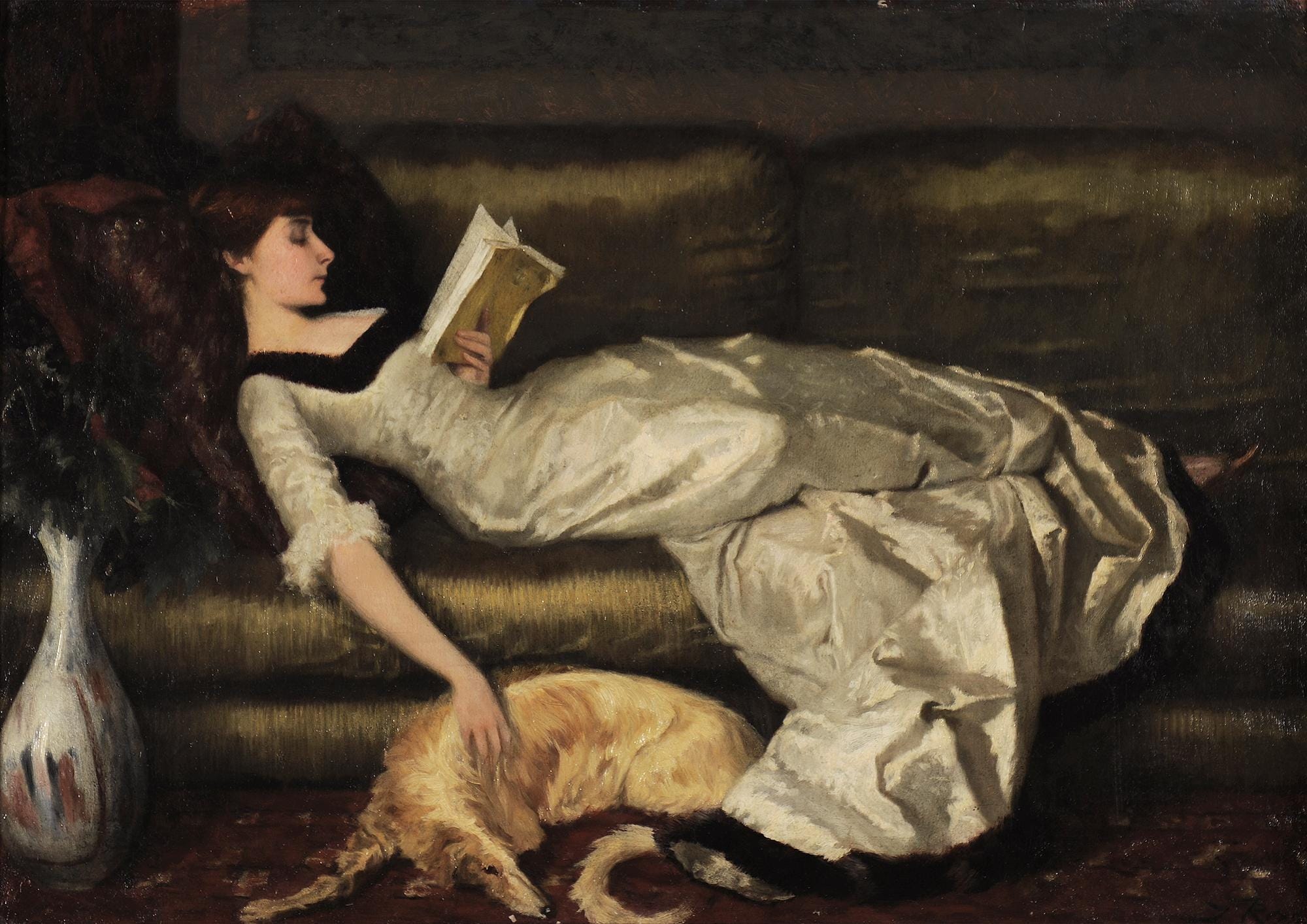
Whenever people hear the word “classic,” they often assume the books will be difficult, slow, or impossible to relate to. And to be fair, sometimes they are.
But modern literature can be difficult too. The difference is that classics have a reputation for being intimidating before we even open them. In reality, classics vary enormously. Some are challenging, while others are surprisingly accessible and deeply entertaining. It all depends on what you pick up, what your reading experience is, and what genuinely interests you.
So let us start from the beginning.
Why should you read classics?
1. Classics have stood the test of time
There is something remarkable about a book surviving for decades, centuries, or even thousands of years. Most books disappear quickly. Classics do not.
They continue to be read because generation after generation keeps finding truth inside them. Human nature has not changed nearly as much as we like to believe. People still struggle with love, ambition, jealousy, grief, loneliness, identity, and meaning just as they did hundreds of years ago. That is why classics still feel relevant.
When you read a great classic, you often realize that someone who lived centuries ago understood emotions and experiences that still exist today. There is something comforting about that. It reminds us that we are not the first people to feel lost, uncertain, hopeful, or afraid.
2. Classics can compress centuries into one book
Reading classics also gives us historical and cultural perspective. A single novel can teach us about the social structures, political tensions, expectations, and values of another era in a way that feels alive rather than academic. Classics allow us to step directly into another time period and experience how people thought, lived, and understood the world.
At the same time, many modern stories, films, and ideas are deeply influenced by classic literature. Reading classics often feels like discovering the foundation beneath contemporary culture. You begin to recognize references, themes, and character archetypes everywhere.
3. They move at a different pace than modern life
One of the biggest reasons I believe classics matter today is because they force us to slow down. We live in a world built around speed and distraction. Everything competes for our attention. We skim articles, scroll endlessly, and consume information in fragments.
Classics ask something very different from us; they ask us to sit still, to focus and to be patient. And while that can feel uncomfortable at first, it is also what makes reading them so rewarding.
Classics are not designed for instant gratification. They require presence, attention, and reflection. In many ways, reading classics feels almost rebellious in a culture that constantly pushes us toward shorter attention spans.
4. They challenge you to become a better reader
Classics also make you grow. Not because they are inherently superior to modern books, but because they often demand more from the reader. They expand your vocabulary, strengthen your concentration, and expose you to different writing styles and ways of thinking.
The more classics you read, the easier they become. What once felt intimidating slowly becomes enjoyable. You begin to notice the beauty of the language, the complexity of the characters, and the depth beneath the story itself. They invite us to think more deeply about people, society, and ourselves. That, to me, is one of the greatest gifts literature can offer.
If you are interested in reading more classics but find certain aspects challenging, let me know in the comments. I would also love to hear about your own reading habits and relationship with books.
I will continue this series with a Part Two on how to actually approach reading classics without feeling overwhelmed, so make sure to subscribe to The Classics List so you do not miss it.
Great article. I agree with every one of your points, especially the first one. These books are time tested. The cream rises to the top, and if there's a classic that I don't like, it just means it's not to my taste. I've read many different genres in my life, but classic literature is my true home.
Superb article! Agree with all your points.
I'd also say some of the themes like Chekhov, Tolstoy, or Gogol wrote about in such an interesting way are perhaps hard to find in current writing, but these themes are still relevant.